

Shopify and WooCommerce are both excellent e-commerce platforms but they serve different types of businesses. Shopify is faster to launch, easier to manage, and better for businesses that want to focus on selling rather than maintaining technology. WooCommerce gives you more control and lower platform costs but requires significantly more technical management. This guide covers exactly which one fits your situation.
Choosing between Shopify and WooCommerce is one of the most consequential technology decisions an e-commerce business makes. Get it right and you have a platform that grows with you for years. Get it wrong and you are looking at a costly migration, lost sales during downtime, and hours of technical work that should have gone into growing the business.
Both platforms power millions of stores worldwide. Both can build a professional, high-converting online store. The difference is not in what they can do at their best. The difference is in what they require from you, what they cost over time, and which type of business each one is actually built for. Our Shopify specialists and website solutions team work with both platforms daily. Here is the honest comparison.
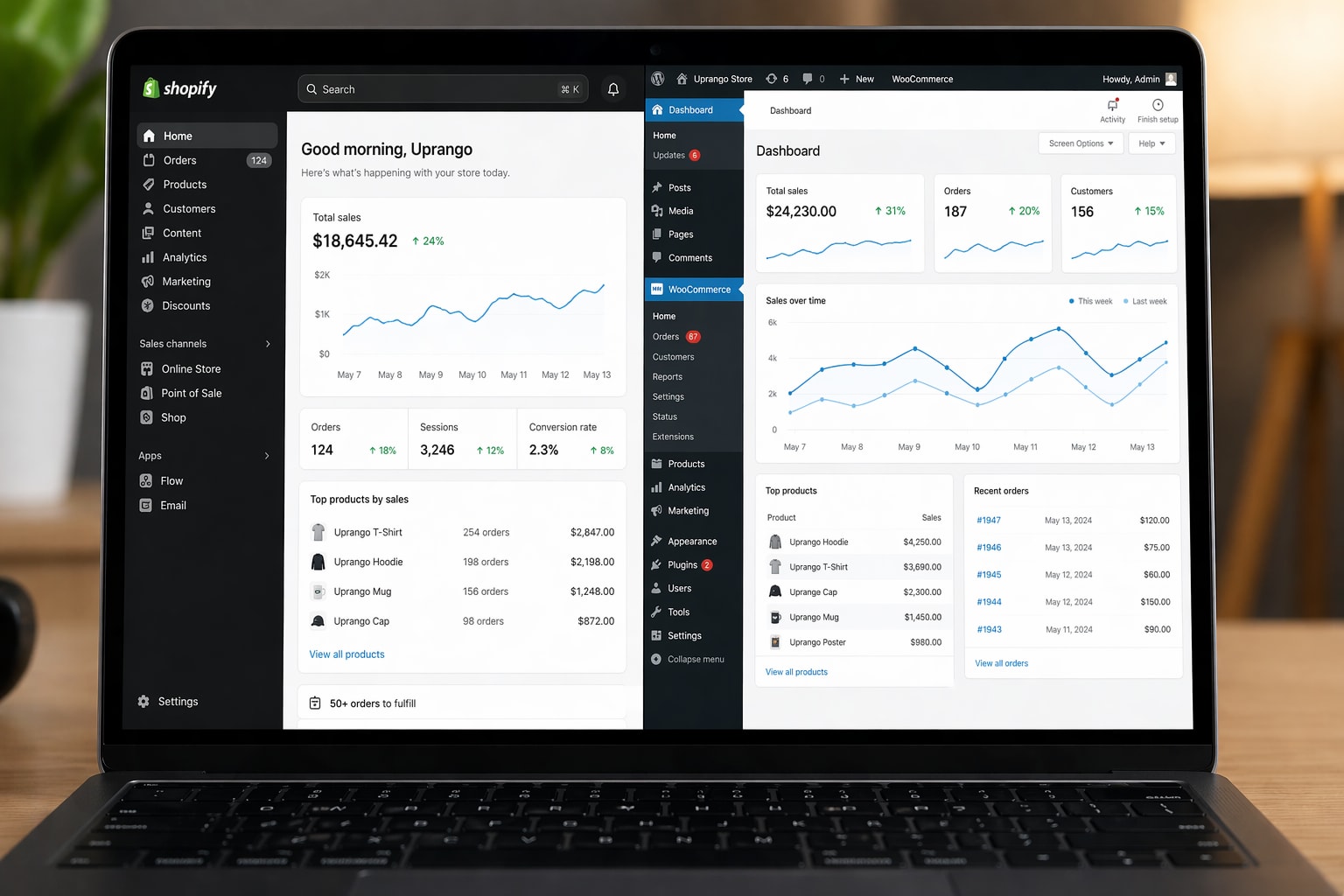
The Core Difference Between Shopify and WooCommerce
Shopify vs WooCommerce: Head to Head
- Free plugin but hosting, SSL, and premium plugins add up quickly
- Requires WordPress knowledge and ongoing technical maintenance
- Plugin conflicts and update issues are a recurring problem
- Full ownership and control over every aspect of the store
- Unlimited customisation with thousands of plugins available
- No platform transaction fees but payment gateway fees apply
- Security is entirely your responsibility to manage
- Can become slow without proper hosting and optimisation
- Fixed monthly fee covers hosting, security, and updates
- No technical knowledge required to launch and manage a store
- Stable platform with no plugin conflicts or update issues
- Less control but significantly less maintenance overhead
- Extensive app store with 8,000+ integrations available
- Platform transaction fees unless using Shopify Payments
- Enterprise-grade security managed by Shopify automatically
- Fast by default with global CDN included on all plans
How Each Platform Stacks Up Across Key Decisions
Ease of Setup and Launch Speed
Shopify wins decisively on setup speed. A basic Shopify store can be live with products, payment processing, and a professional theme in a single day. The setup process is guided, logical, and requires no hosting configuration or technical decisions. WooCommerce requires choosing and configuring hosting, installing WordPress, installing WooCommerce, configuring payment gateways, choosing and installing a theme, and then adding products. For a non-technical founder, this process typically takes days to weeks and often requires developer help.
Shopify Wins
Total Cost of Ownership
The cost comparison is more nuanced than it first appears. WooCommerce itself is free but the real cost of a WooCommerce store includes: managed WordPress hosting (typically 30 to 100 per month for a store with meaningful traffic), premium theme, essential plugins for payments, security, SEO, email, and backups, plus developer time for setup, maintenance, and troubleshooting. A realistic WooCommerce total cost is 150 to 400 per month for a small to medium store. Shopify's Basic plan starts at 29 per month and the Advanced plan at 299 per month, with everything included. For high-volume stores, WooCommerce often becomes more cost-effective. For stores under 1 million annual revenue, the costs are broadly comparable once all WooCommerce costs are properly accounted for.
Depends on VolumeCustomisation and Flexibility
WooCommerce wins on raw customisation capability. Because it runs on WordPress, you have access to the full WordPress ecosystem of themes, plugins, and custom development. You can build virtually any functionality with enough development resource. Shopify's customisation is extensive but operates within defined limits. The Liquid templating language, theme architecture, and app ecosystem cover most business needs but there are specific things Shopify simply will not let you do. For standard e-commerce functionality, both platforms cover everything you need. For highly specific or unusual requirements, WooCommerce is the more flexible choice.
WooCommerce WinsSecurity and Reliability
Shopify wins significantly on security and uptime. Shopify manages PCI DSS compliance, SSL certificates, DDoS protection, and infrastructure security automatically. Shopify's uptime guarantee and global CDN mean your store loads fast and stays online even during traffic spikes. With WooCommerce, security is your responsibility. Outdated plugins, weak hosting, and misconfigured settings are the most common causes of WooCommerce store breaches. A properly secured and maintained WooCommerce store can be very secure, but it requires active management and technical knowledge to keep it that way.
Shopify Wins
Platform Comparison at a Glance
| Factor | Shopify | WooCommerce |
|---|---|---|
| Setup time | 1 to 3 days | 1 to 4 weeks |
| Technical knowledge | None required | WordPress knowledge needed |
| Monthly cost | From 29 per month | From 50 to 400+ per month total |
| Hosting | Included and managed | Self-managed, separate cost |
| Security | Fully managed by Shopify | Your responsibility |
| Customisation | Extensive within platform limits | Unlimited with development |
| Transaction fees | 0.5 to 2% unless using Shopify Payments | No platform fees |
| Maintenance | Fully handled by Shopify | Ongoing self-management required |
Who Should Choose Shopify

Shopify is the right choice when selling is your priority and technology management is not something you want to spend time on. If you want to launch quickly, stay focused on products and marketing, and have a platform that works reliably without technical intervention, Shopify is almost always the better fit.
It is particularly strong for direct-to-consumer brands, dropshipping businesses, and any store owner who wants predictable costs and minimal maintenance overhead.
New Store Owners
If you are launching your first e-commerce store and want to focus on products and marketing rather than technology, Shopify removes every technical barrier to getting started.
Fast-Growing DTC Brands
Shopify scales seamlessly from 10 orders per month to 10,000. The infrastructure handles traffic spikes automatically and the platform grows with your revenue without requiring technical upgrades.
Businesses Without Tech Teams
If you do not have an in-house developer or a reliable development partner, Shopify is significantly safer than WooCommerce. The platform manages everything you would otherwise need technical help for.
Who Should Choose WooCommerce
The platform decision also connects to how you manage and convert the leads your store generates. A well-chosen CRM connected to your e-commerce platform makes the difference between a store that generates revenue and one that generates revenue and insight. Our HubSpot CRM integration works with both Shopify and WooCommerce and can significantly improve how you track, nurture, and convert store visitors into repeat customers. The same data discipline that makes a great e-commerce store also drives better decisions in your broader marketing strategy.
If you are still undecided or want expert guidance on which platform fits your specific business model, talk to the Tech Striker team. We have built and migrated stores on both platforms and can give you an honest recommendation based on your actual requirements rather than a platform preference.
- Shopify is a fully managed hosted platform. WooCommerce is a self-hosted WordPress plugin. The core difference is control vs convenience and who is responsible for the technology.
- Shopify is faster to launch, easier to manage, and more secure by default. WooCommerce offers more customisation flexibility and no platform transaction fees.
- Total cost of ownership is broadly comparable for stores under 1 million annual revenue once all WooCommerce hosting, plugin, and maintenance costs are properly accounted for.
- Shopify is the better choice for new store owners, fast-growing DTC brands, and businesses without technical teams. WooCommerce suits businesses already on WordPress or with very specific customisation requirements.
- Neither platform is universally better. The right choice depends on your technical capability, customisation needs, growth plans, and how much time you want to spend managing technology versus selling.