
WordPress vs HubSpot CMS: Which One Should You Choose in 2026?


Choosing a CMS in 2026 is not about chasing trends. It is about choosing what fits your business. Both WordPress and HubSpot CMS are strong platforms. Both can bring traffic, generate leads, and support revenue growth. But they work in very different ways behind the scenes. The right choice depends on how you market, how you sell, and how much control you want over your website, especially if you are working with a WordPress development company to build and manage it.
Let’s break it down in a clear, practical way so you can decide what actually makes sense for your business.
What Is WordPress and Who Is It Best For?
WordPress powers over 40% of the web, and that’s not changing anytime soon. It’s an open-source CMS that gives you complete control over design, content, hosting, and functionality. A skilled WordPress development company can build almost anything on it, from simple blogs to complex enterprise platforms.
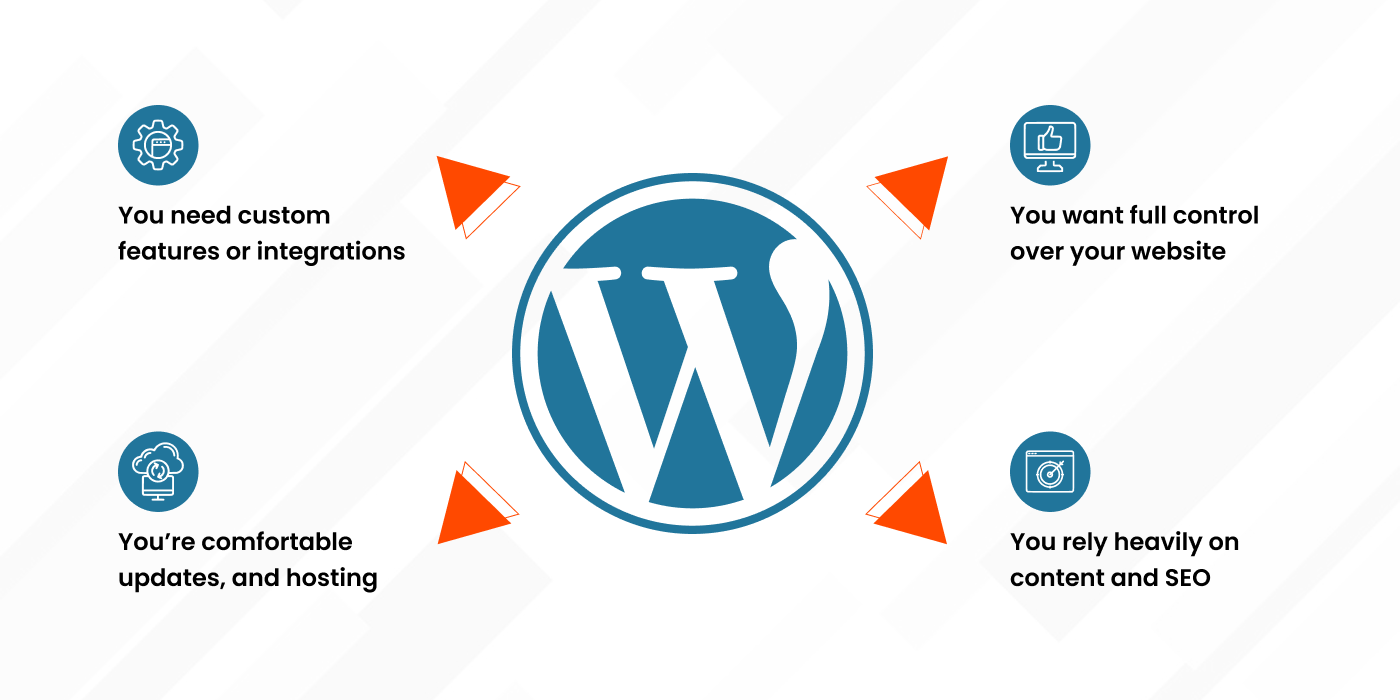
WordPress is a strong fit if:
- You want full control over your website
- You rely heavily on content and SEO
- You need custom features or integrations
- You’re comfortable managing plugins, updates, and hosting
With freedom comes responsibility. Performance optimization, security, backups, and updates all fall on your team or your development partner.
What Is HubSpot CMS and Who Should Use It?
HubSpot CMS is built for businesses that see their website as a growth engine, not just a digital brochure. It’s tightly integrated with HubSpot CRM, marketing automation, sales tools, and analytics. That means your website, leads, emails, and customer data live in one system.
HubSpot CMS makes sense if:
- Marketing and sales alignment matter to you
- You want built-in analytics and automation
- You don’t want to manage hosting or security
- You’re already using or planning HubSpot tools
Companies often pair HubSpot CMS with professional HubSpot consulting services to get the setup right from day one.
Key Differences Between WordPress and HubSpot CMS
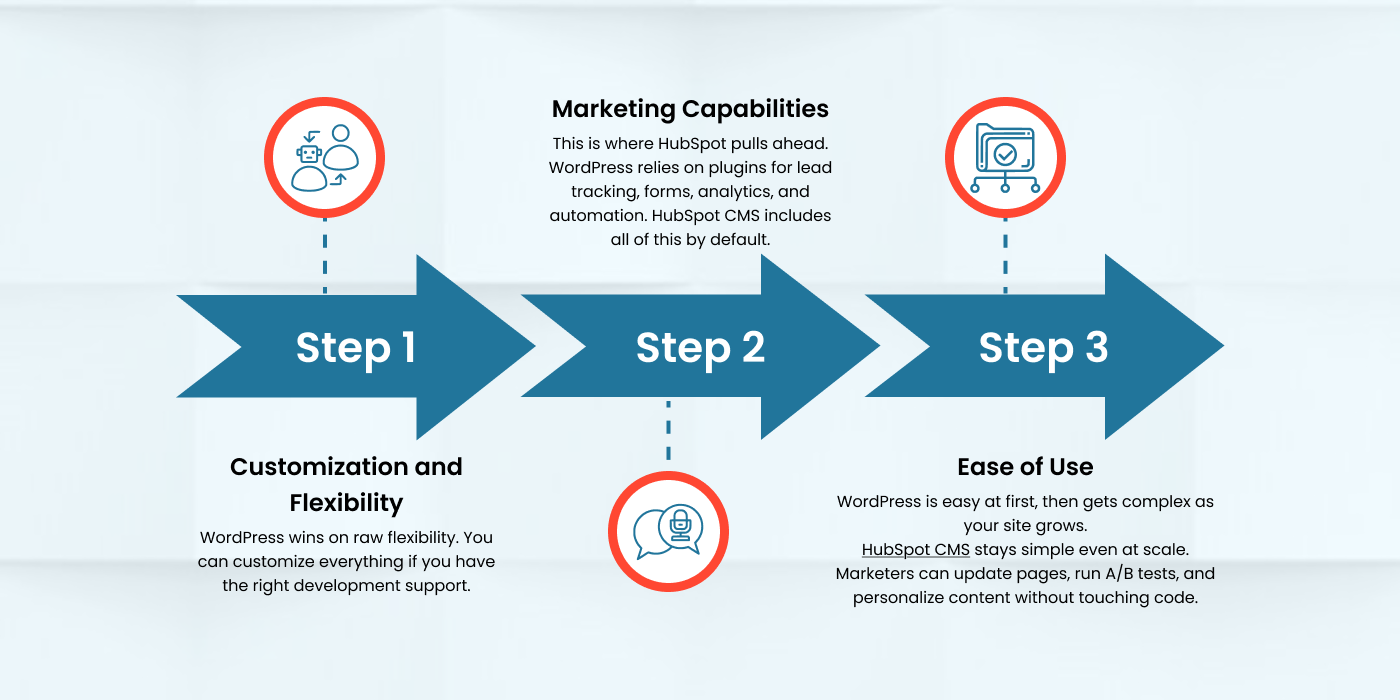
- Customization and Flexibility
WordPress wins on raw flexibility. You can customize everything if you have the right development support.
HubSpot CMS is more structured. You can still build custom themes and modules through hubspot cms development, but it works best within HubSpot’s ecosystem. - Marketing Capabilities
This is where HubSpot pulls ahead. WordPress relies on plugins for lead tracking, forms, analytics, and automation. HubSpot CMS includes all of this by default.
If your website is central to your inbound strategy, HubSpot simplifies the entire workflow. - Ease of Use
WordPress is easy at first, then gets complex as your site grows.
HubSpot CMS stays simple even at scale. Marketers can update pages, run A/B tests, and personalize content without touching code.
SEO, Performance, and Security Comparison
SEO
WordPress gives advanced control. With the right plugins and a solid SEO strategy, it’s extremely powerful. HubSpot CMS simplifies SEO. You get built-in recommendations, clean code, and strong technical SEO out of the box. Less control, but fewer mistakes.
Performance
WordPress performance depends on hosting, plugins, and optimization. HubSpot CMS runs on a global CDN with automatic performance optimization. No tuning required.
Security
WordPress security is your responsibility. HubSpot CMS handles security, SSL, monitoring, and updates automatically. This is a big reason fast-growing companies switch.

Cost Breakdown in 2026
| Cost Aspect | WordPress | HubSpot CMS |
| Upfront cost | Lower initial cost | Higher subscription cost |
| Ongoing expenses | Hosting, plugins, maintenance, and development | Mostly included in the subscription |
| Hidden costs | Can increase over time | Very few |
| Hosting and security | Managed separately | Included |
| Marketing tools | Added through plugins | Built in |
| Long-term cost | Grows as the site becomes complex | More predictable and easier to plan |
Which Platform Fits Your Business Goals?
| Choose WordPress If | Choose HubSpot CMS If |
| Content and SEO are your main focus | Your website directly supports marketing and sales |
| You want complete design freedom | You want built-in automation and analytics |
| You are working with a trusted WordPress development company | You plan to scale inbound marketing quickly |
| You prefer managing plugins and tools yourself | You want fewer tools and less technical setup |
Many growing businesses start with WordPress and later migrate to HubSpot when marketing complexity increases.
Final Verdict
There is no one-size-fits-all winner here. WordPress is built for control and flexibility, while HubSpot CMS is designed for alignment and efficient growth. If your website’s main job is to publish content and rank on search engines, WordPress does that very well. If your website is meant to generate leads, support sales, and track results, HubSpot CMS often makes more sense.
Tech Striker believes the smartest choice is the one that fits how your business actually works today and how you plan to grow in 2026. Choosing the right CMS is less about features and more about long-term clarity and direction.